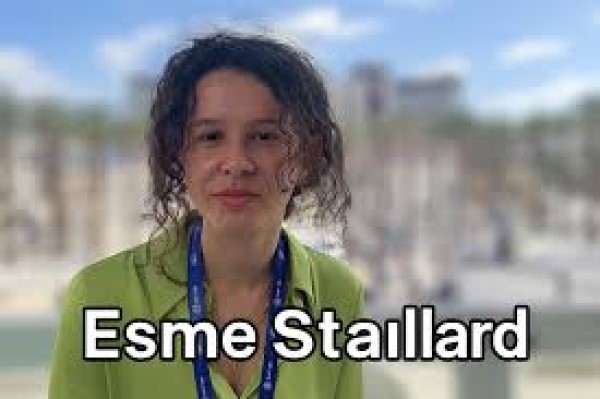
In the modern era of global environmental challenges, the role of clear and accurate reporting has never been more crucial. Among the voices rising to meet this demand is Esme Stallard, a British climate and science journalist whose work at the BBC has garnered attention for its clarity, depth, and commitment to truth. Her reporting not only informs the public but also fosters an understanding of complex climate issues that impact every corner of the globe.
Who is Esme Stallard?
Esme Stallard is a highly respected British journalist specialising in climate and science reporting. She currently serves as a Climate & Science Reporter at BBC News, a position that places her at the forefront of environmental journalism in the United Kingdom. While the exact details of her early life and age remain private, her professional journey and educational background highlight a dedication to understanding the science behind climate change and communicating it effectively to a broad audience.
Her career trajectory is notable for its blend of practical experience and journalistic expertise. Before joining the BBC, Esme worked extensively as a climate change consultant, advising cities, organisations, and policymakers on achieving net-zero targets, emissions modelling, and resilience planning. This experience gave her a solid foundation in both the scientific and practical aspects of climate issues, allowing her to bring a unique perspective to her reporting.
Education and Early Career
Esme Stallard’s academic background is firmly rooted in environmental sciences, particularly in areas such as geology and sustainability. This formal education, coupled with hands-on consulting experience, allows her to interpret complex environmental data and policy developments with accuracy and nuance.
Her early career focused on supporting organisations to meet sustainability goals. She worked on projects that involved carbon emissions tracking, climate adaptation strategies, and policy implementation. This combination of scientific literacy and applied experience made her transition into journalism both natural and impactful.
The Importance of Climate Journalism
Climate journalism serves a critical role in today’s society. As the world faces rising temperatures, extreme weather events, and ecological degradation, accurate reporting becomes more than a professional pursuit—it is a civic duty.
Journalists like Esme Stallard are tasked with translating complex scientific findings into narratives that the public can understand. This requires not only knowledge of the science but also the ability to identify which aspects of a story matter most to the audience. Esme’s reporting demonstrates a keen awareness of this responsibility, often highlighting the human, economic, and environmental consequences of climate change in ways that resonate with viewers and readers.
Esme Stallard’s Reporting Style
Esme Stallard’s reporting style is defined by clarity, accuracy, and engagement. She focuses on making science accessible without oversimplifying critical details. Her work often includes:
In-Depth Analysis
Esme goes beyond headline news to explore the implications of environmental developments. For instance, when reporting on heatwaves or extreme weather, she not only describes the events but also analyses contributing factors, such as climate change trends and urban planning challenges.
Human-Centred Stories
While statistics and models are crucial, Esme often highlights the human impact of environmental change. She tells stories of communities affected by floods, heatwaves, and pollution, making the consequences of climate issues tangible and relatable.
Explaining Policy and Science
One of the hallmarks of Esme’s reporting is her ability to break down complex climate policies and scientific studies. She explains the significance of agreements, such as international climate negotiations, and how they influence national and local actions.
Key Topics Covered by Esme Stallard
Esme Stallard covers a wide range of environmental topics, ensuring that audiences gain a holistic understanding of climate issues. Some of the primary areas she focuses on include:
-
Climate Change: Reporting on global temperature trends, greenhouse gas emissions, and climate modelling.
-
Pollution and Plastic Waste: Exploring environmental impacts, policy responses, and public initiatives.
-
Biodiversity and Ecosystems: Highlighting threats to wildlife and natural habitats, alongside conservation efforts.
-
Clean Energy Innovations: Covering renewable energy developments and technological solutions for sustainable living.
-
Extreme Weather Events: Providing analysis of heatwaves, floods, storms, and their broader environmental implications.
Her dedication to accuracy ensures that viewers and readers are well-informed, empowering them to make sense of the increasingly complex environmental landscape.
Challenges in Climate Reporting
Climate journalism comes with unique challenges, and Esme Stallard navigates these with professionalism. One of the biggest hurdles is communicating scientific uncertainty without diminishing credibility. Scientific findings are often probabilistic, and predicting environmental outcomes involves nuance. Esme carefully balances this uncertainty while presenting clear, actionable information to her audience.
Another challenge is combating misinformation. In an era where false narratives about climate change can spread rapidly, credible journalism becomes a vital tool for public understanding. Esme’s work consistently prioritises verified data and authoritative sources, helping to build trust among her audience.
The Role of Digital Media
Digital media has transformed how climate journalism reaches the public. Platforms like online news articles, podcasts, and social media allow journalists to deliver content in diverse formats. Esme Stallard leverages these platforms effectively, producing content that is accessible and engaging across multiple media channels.
Her ability to adapt to the digital landscape ensures that important climate news reaches a wide and varied audience. By combining traditional reporting techniques with digital innovation, she maximises the impact of her stories.
Inspiring the Next Generation
Esme Stallard’s career serves as an inspiration to aspiring science and climate journalists. Her path demonstrates that expertise in environmental science, coupled with strong communication skills, can lead to impactful reporting.
Young journalists can learn from her approach: the importance of accuracy, the need for clear storytelling, and the value of connecting complex science to everyday life. By highlighting both challenges and solutions, Esme encourages audiences not only to understand climate issues but also to engage with them constructively.
Future of Climate Journalism
As climate change accelerates, the role of journalists like Esme Stallard will only become more important. The demand for well-informed, accessible, and accurate reporting is expected to grow. Esme’s work sets a standard for future climate journalists, emphasizing integrity, clarity, and audience engagement.
By combining scientific literacy with compelling storytelling, she ensures that climate reporting is not just informative but transformative, encouraging policy awareness, community action, and individual responsibility.
Conclusion
Esme Stallard exemplifies the best qualities of modern climate journalism. Her dedication to clear communication, her ability to navigate complex scientific topics, and her commitment to truth make her an influential voice in environmental reporting.
In a world increasingly shaped by climate challenges, journalists like Esme are essential. They provide clarity amid uncertainty, amplify the voices of affected communities, and hold policymakers accountable. As audiences continue to seek reliable and engaging information about the environment, Esme Stallard’s work stands as a model for excellence, demonstrating how journalism can inform, inspire, and drive meaningful action.